EDUCATION PROGRAMS
The Evergreen Heritage Center (EHC) Foundation, a public charity, is dedicated to utilizing the Evergreen Heritage Center, an historic Maryland estate adjacent to the Great Allegheny Passage, to provide environmental and experiential learning opportunities for children of all ages and circumstances. The EHC's five signature education programs are described below. For a flyer describing these programs, click here. In partnership with the Chesapeake Bay Foundation and the Chesapeake Bay Trust, the EHC is also offering 5, 3, and one day Professional Development programs for educators. For more information, contact us.
Evergreen Environmental Education
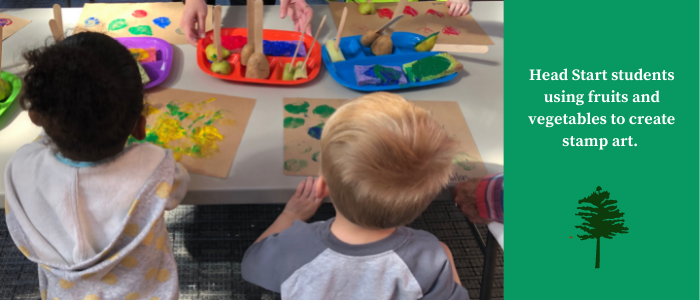
This program provides environmental education activities for children and youth ages three to eighteen, based on the proven, award-winning environmental curricula of Project Learning Tree, Project WET, Project WILD, and Wonders of Wetlands (WOW). In addition, Frostburg State University education and Allegany College forest technology majors, who help conduct the activities while supervised by the EHC’s environmental education experts, gain field experience and a valuable credential. This collaborative effort, which is providing meaningful outdoor education experiences for hundreds of children and youth each year, is part of a comprehensive five year plan co-authored by Allegany County Public Schools and the Evergreen Heritage Center Foundation to improve student environmental literacy by 25% county-wide and provide a model for environmental literacy across the state. This plan supports Maryland’s new environmental literacy graduation requirement (the first in the nation) and will also strive to ensure that all students have at least one outdoor environmental education experience every school year (as mandated by the Maryland Partnership for Children in Nature). The ACCEL plan, which is also aligned with the Maryland State Curriculum, builds upon proven outdoor environmental education programs such as those offered at the EHC, begins education efforts early with preschool (Head Start) children, provides at least one meaningful outdoor experience per child per year from preschool through grade twelve, “raises the bar” by using the scientific method and proven techniques to help students investigate and understand complex environmental issues, utilizes assessment tools such as topic-specific pre/post-tests, offers field experience (and science credentials) to college students who assist with outdoor experiences and create education materials as part of their course work, and includes a robust but flexible professional development program for educators.
Why are the Foundation and its partners so committed to environmental education?
- According to the Maryland Partnership for Children in Nature, environmental education can address critical behavioral and health issues (including childhood obesity, attention deficit disorder, and depression) associated with “nature deficit disorder”; these issues represent a real threat to children since (per a 2010 study by the Kaiser Foundation), children spend an average of 7 1/2 hours/day in front of a television or computer, and less than 4 minutes/day in unstructured outdoor play;
- According to the National Environmental Education Foundation, supporter of the national No Child Left Inside initiative, the outdoors are also important for children’s overall well-being (e.g. cognitive development and cooperative play) and help serve as a buffer against stress;
- According to a 2009 report prepared for the state, Maryland has a STEM (science, technology, engineering, and math) deficit: the state “suffers from a shortage of highly qualified STEM workforce … with approximately 6000 STEM openings a year… and only 4000 STEM graduates”; plus the state is only producing 23% of the STEM teachers it requires;
- Children need to get excited about learning and staying in school, since according to the National Governors Association, as many as 30 percent of students leave school without a diploma.
Higher Education and Research
This program, offered by the EHC since 2008, provides experiential learning opportunities for undergraduate and graduate students, with the goal of enabling the region’s students to obtain real world experience and credentials for their resumes. The program requires students to create a professional quality work product that can be added to their portfolio or resume. Opportunities span the arts, science, business and education and include projects such as analyzing soil samples, creating botanical illustrations, developing ideas for green business opportunities, and researching native medicinal herbs. This past year, the EHC has provided hands-on learning opportunities for over 300 students as part of this program. Click here for more information.
Evergreen Environmental Wellness
This program, developed in partnership with the Western Maryland Health System, teaches children and youth where their food comes from, how to plant and harvest food, and how they can “live off the land” while protecting it for future generations. This program also encourages children to spend time outdoors, as opposed to seven plus hours per day in front of an electronic device (per the Kaiser Foundation, 2010). This year, this program includes a summer Science Discovery day camp during which campers become science sleuths and learn about our ecosystems, how different species depend upon one another, the important role of water, Mother's Nature's medicine chest, how to plant and harvest a vegetable garden, and much more. Campers will also be documenting their adventures in a journal and creating a group mural to showcase their discoveries. Scholarships for qualifying families are also available. Camp will be held Monday through Friday, 9am to noon, July 8 to July 19. For more information, click here, call 301-687-0664, or contact us.
Professional Development
This program, offered in partnership with EHC academic partners and the Chesapeake Bay Foundation, teaches educators how to integrate experiential learning into the school curriculum, which has been shown in studies such as those conducted by the University of Maryland to increase learning retention by as much as 300%. It includes one day (click here), three day (click here), and five day programs (click here). For more information call 301-687-0664 or contact us.
Conservation Workshops
This program provides workshops for the community to teach best practices in environmental conservation and stewardship. In 2013, the focus will be on sustainable agriculture and forestry. Our spring workshop will be held on Saturday June 1st from 1-4pm at the EHC in partnership with the Home Ground community organization. The theme of the day will be gardening and will feature the new Heritage Hoop House, a 2100 square foot high tunnel greenhouse designed to extend the growing season and increase crop production, collect rainwater for drip-line irrigation, and solar energy to power its ventilation system. Attendees may participate in a variety of activities and demonstrations as well as tours of the Evergreen Museum and Barn. For more information call 301-687-0664 or contact us.